
Expanding your SaaS or mobile application into the Middle East and North Africa (MENA) region is one of the most effective ways to scale your user base. However, the MENA market is not just a new territory—it is a distinct ecosystem that demands a “Localization-First” engineering mindset.
Treating Arabic as a simple “language add-on” often results in broken UI, frustrated users, and missed revenue. To succeed, you must move beyond translation and build for the nuances of the Arabic-speaking digital experience. Here are six essential strategies to ensure your software feels native, intuitive, and professional.
1. Architecting for RTL (Right-to-Left) UI Mirroring
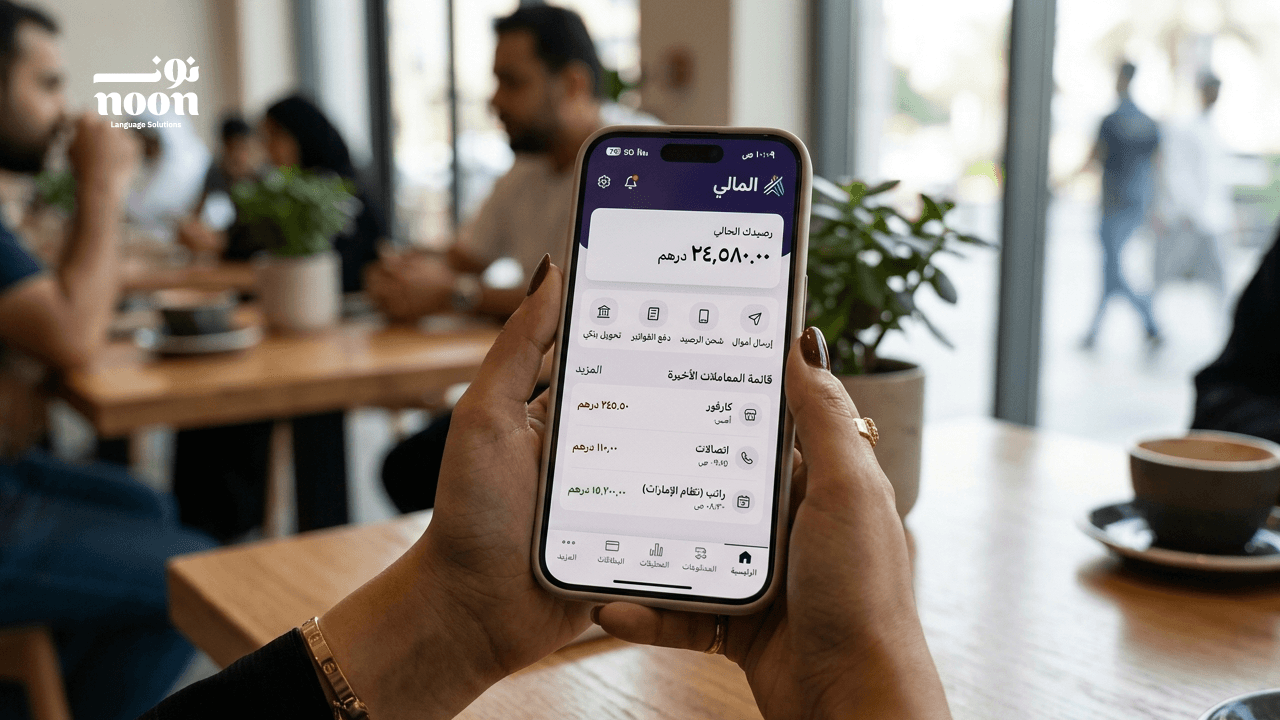
In the Arabic digital world, the “flow” of information is reversed. It is not enough to simply change the text direction; you must perform a full UI mirror.
- The Strategy: Think of your interface as a reflection in a mirror. Navigation bars, menus, and sidebars should align to the right. Icons indicating direction (like “Back” arrows or progress bars) must be flipped, though care should be taken with non-directional icons (like hearts, cameras, or phones) which should remain as they are.
- Pro Tip: Build RTL support into your design system from day one. Using frameworks like Flutter or React Native can automate much of this, but your component library must be built with flexible alignment properties. If you’re building a broader roadmap for your software, check out our insights on Localization Strategy: What is it and how to plan it.
2. Managing Dynamic Text Expansion and Truncation
Arabic is a morphologically rich language, and translations from English to Arabic often result in text that is 20–30% longer.
- The Problem: Fixed-width containers (like buttons, labels, or navigation headers) that work perfectly for English will inevitably truncate or overlap when filled with Arabic text.
- The Strategy: Avoid rigid, fixed-size UI elements. Utilize dynamic layout containers that grow based on content size.
3. Selecting the Right Arabic Script & Font Rendering
Not all fonts are created equal. A font that looks elegant in English may render Arabic characters as disjointed or illegible shapes.
- The Strategy: Prioritize web-safe, high-legibility Arabic typefaces such as Cairo, Amiri, or Noto Sans Arabic. Ensure your CSS/System settings support proper line-height and vertical spacing, as Arabic script often has intricate diacritics and vertical ligatures that require more “breathing room.”
4. Intelligent User Segmentation & Dialect Logic
The “Arabic-speaking world” is a collection of diverse cultures with their own preferences.
- The Strategy: For core software UI, Modern Standard Arabic (MSA) is the gold standard—it is formal, universally understood, and professional. However, for conversational UX, marketing emails, or push notifications, consider regional segmentation.
- Why it matters: Understanding when to use a formal vs. a regional approach is critical. For more on defining your specific approach, read our guide on Transcreation vs Localization: Defining Your Strategy for MENA.
5. Implementing “Human-in-the-Loop” (HITL) AI Workflows
AI is a powerful tool for scaling, but in the MENA market, an “AI-only” approach is a liability.
- The Reality: Machine translation models often miss the subtle cultural context, honorifics, or religious sensitivities that are vital for brand trust in the region.
- The Strategy: Use AI for speed and terminology management, but mandate a native human QA layer for all UI-facing strings and legal/compliance text. At Noon Language Solutions, we have embraced this future with our Hybrid Human-AI Identity, ensuring that your content is not just grammatically correct, but culturally resonant.
6. Establishing a Continuous Localization (L10n) Pipeline
Localization is not a one-time project; it is an ongoing operations cycle.
- The Strategy: Integrate your localization efforts into your CI/CD pipeline. Use a Translation Management System (TMS) to automate string extraction, ensuring that whenever a developer pushes a new feature in English, the corresponding keys are automatically processed.
- Industry Application: Whether you are in SaaS, Fintech, or Entertainment, consistent localization is key. Learn more about specialized requirements in our articles on Arabic FinTech Localization for MENA: 2 Challenges You Should Know and How Localization Supports the Full-Loop in the Entertainment Industry.
Conclusion: Build for the User, Not the Market
The most successful apps in the MENA region win because they treat their Arabic users as a primary audience, not an afterthought. By building your architecture for RTL flexibility, investing in human-refined AI, and automating your localization workflow, you move from being a “global visitor” to a “local favorite.”
Are you ready to scale your software to the MENA region?