Looking for a dubbing service provider in Dubai to localize content for Arabic-speaking audiences? Noon Language Solutions is a full-service Arabic localization and post-production language solutions provider based in Dubai, UAE, with more than 10 years of experience serving businesses, broadcasters, studios, and content owners localizing content for the MENA region.
Noon specializes in dubbing, transcription, voice-over, subtitling, translation, and AI-powered localization, helping organizations adapt content so it resonates naturally with Arabic-speaking audiences.
From OTT and broadcast content to films, series, animation, corporate videos, e-learning, and branded content, professional dubbing requires much more than translating dialogue. It involves linguistic adaptation, voice casting, recording, direction, synchronization, audio post-production, and quality control.
For organizations looking for an experienced Arabic dubbing company in Dubai, Noon provides an integrated language and localization workflow tailored to the requirements of each project.
What Is a Dubbing Service Provider?
A dubbing service provider manages the process of replacing the original spoken dialogue in audiovisual content with professionally recorded dialogue in another language.
Professional dubbing can include several stages, depending on the project:
- Script translation
- Linguistic adaptation
- Dialogue adaptation and timing
- Voice casting
- Voice recording
- Dubbing direction
- Character voice matching
- Synchronization
- Audio editing
- Mixing and mastering
- Linguistic quality assurance
- Technical quality control
- Final content delivery
The objective is not simply to translate what is being said. A successful dubbed production should sound natural in the target language while preserving the meaning, tone, personality, and intent of the original content.
Arabic Dubbing Services in Dubai
Arabic dubbing is an important part of content localization for organizations targeting audiences across the UAE, GCC, and wider MENA region.
Arabic localization can involve considerations such as:
- Target audience
- Language style
- Modern Standard Arabic or regional requirements
- Cultural references
- Character personality
- Terminology
- Tone of voice
- Dialogue length
- Timing
- Synchronization
- Content context
A literal translation may communicate the basic meaning of a sentence but still sound unnatural when spoken by a character, presenter, or narrator.
Professional Arabic dubbing therefore combines linguistic expertise with voice performance, direction, recording, and post-production.
Noon Language Solutions specializes in Arabic localization and provides dubbing and other language solutions designed for organizations adapting content for Arabic-speaking audiences in the MENA region.
What Types of Content Can Be Dubbed?
Dubbing can be used across a wide range of audiovisual content.
OTT and Streaming Content
OTT platforms and streaming services require localized versions of films, series, documentaries, animation, and other content for audiences in different markets.
OTT dubbing projects can involve:
- TV series
- Feature films
- Documentaries
- Animation
- Children’s content
- Reality programming
- Short-form content
- Original productions
Large-scale OTT localization can also require consistent terminology, voice casting, linguistic quality control, and reliable delivery workflows across multiple episodes, titles, and languages.
Film and Television
Film and television content often requires careful adaptation to preserve character identity, emotion, humor, cultural references, and timing.
Professional dubbing can help distributors and content owners make productions accessible to audiences who prefer to consume entertainment in Arabic.
Animation and Children’s Content
Animation requires particular attention to voice casting and performance because the voice becomes an important part of each character’s identity.
The localized dialogue must work naturally with the character’s personality, emotions, timing, and on-screen performance.
Corporate Videos
Businesses may use dubbing and voice-over to localize:
- Corporate presentations
- Training videos
- Product demonstrations
- Internal communications
- Brand films
- Company videos
- Customer education content
Arabic localization can make corporate content more accessible to employees, customers, partners, and audiences across the region.
E-Learning and Educational Content
Educational and training content requires clear pronunciation, consistent terminology, and a delivery style appropriate for the intended learners.
Dubbing and voice-over can help organizations deliver courses, training programs, tutorials, and educational videos to Arabic-speaking audiences.
Advertising and Branded Content
Advertising localization requires more than translating the original script.
The message, tone, cultural references, timing, and brand personality all need to work naturally for the target market.
Professional voice talent and linguistic adaptation can help brands maintain their intended message while making the content feel appropriate for Arabic-speaking audiences.
Dubbing vs Voice-Over: What Is the Difference?
Dubbing and voice-over are different approaches to audiovisual localization.
Dubbing generally replaces the original spoken dialogue with a new recorded performance in the target language. It can require voice casting, performance direction, timing, synchronization, editing, and mixing.
Voice-over generally places translated or adapted narration over the original content. Depending on the production, the original voice may remain audible underneath or be replaced.
The appropriate solution depends on the content, audience, platform, budget, and desired viewing experience.
For character-driven entertainment, dubbing may be the preferred approach. For documentaries, corporate videos, presentations, and certain informational formats, voice-over may be more appropriate.
How Does Professional Dubbing Work?
A professional dubbing project typically involves several stages.
1. Content Assessment
The project is reviewed to understand the source content, duration, target languages, characters, audience, platform, and technical requirements.
2. Translation and Linguistic Adaptation
The original dialogue is translated and adapted for the target audience.
This stage goes beyond word-for-word translation. Dialogue needs to sound natural when spoken while preserving the original meaning and intent.
3. Voice Casting
Voice actors are selected according to the characters, age, personality, vocal qualities, language requirements, and project specifications.
For commercial and entertainment projects, appropriate casting can have a significant impact on how audiences perceive the localized production.
4. Recording
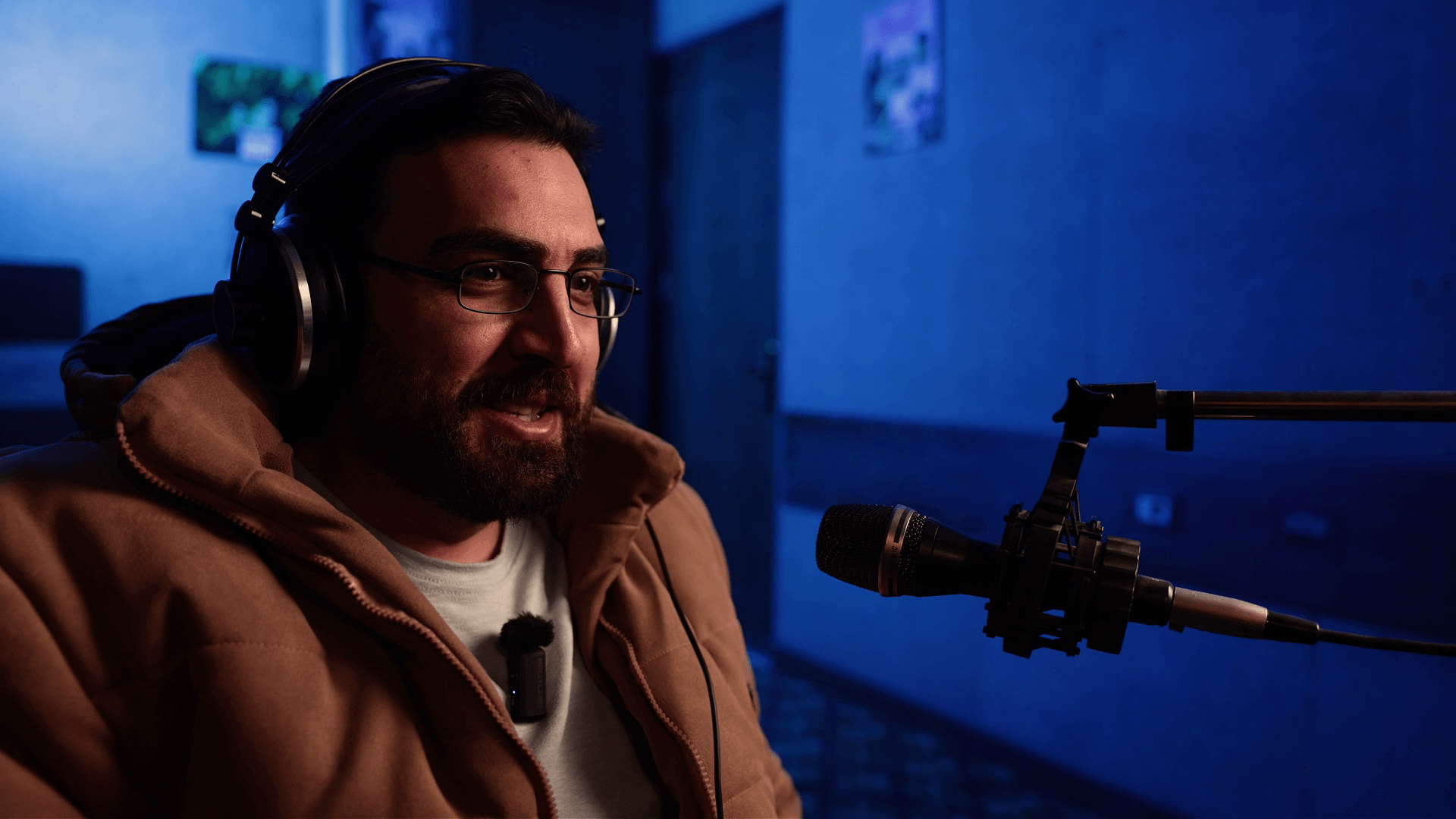
Professional voice actors record the adapted dialogue in a controlled recording environment under the supervision of the production team and, where required, a dubbing director.
5. Synchronization
Depending on the project, the recorded dialogue is synchronized with the original video, character performance, timing, and other production requirements.
6. Audio Post-Production
The recorded dialogue is edited, processed, mixed, and integrated with the other audio elements to create the final localized version.
7. Quality Control
The completed content undergoes linguistic and technical quality checks.
Quality control can include reviewing pronunciation, terminology, dialogue accuracy, timing, synchronization, audio quality, and consistency.
8. Final Delivery
The localized production is delivered according to the technical specifications required by the client, broadcaster, distributor, or platform.
How Much Does Dubbing Cost in Dubai?
There is no single fixed price for professional dubbing services in Dubai. Project costs vary according to the scope and production requirements.
Some of the factors that we, at Noon Language Solutions, consider when estimating a dubbing project’s costs include:
- Content duration
- Source and target languages
- Number of characters
- Number of voice actors
- Translation requirements
- Script adaptation
- Synchronization requirements
- Recording requirements
- Studio requirements
- Audio post-production
- Quality control
- Number of episodes
- Number of languages
- Turnaround time
- Technical delivery requirements
Dubbing providers may price projects by finished minute, episode, language, word count, or as a complete production package.
For larger OTT, broadcast, film, or corporate localization projects, a project-specific quotation is generally more accurate than relying on a standard per-minute price.
How to Choose a Dubbing Service Provider in Dubai
Choosing a dubbing provider should involve more than comparing prices. Before selecting a provider, consider the following factors.
Native-Language Expertise
The provider should have access to qualified native-language linguists and voice talent who understand the target audience.
Professional Voice Talent
Voice casting can significantly affect the quality of a dubbed production. The selected voice should suit the character, presenter, brand, or intended audience.
Translation and Adaptation
Ask whether the provider offers professional translation and dialogue adaptation rather than simply translating the original script word for word.
Dubbing Direction
Experienced direction helps ensure that performances sound natural and that emotions, character intent, and delivery are preserved.
Technical Capabilities
Professional media projects may require specific audio, video, file, synchronization, and delivery specifications. The localization provider should be able to work according to the project’s technical requirements.
Quality Assurance
Linguistic and technical quality control are essential, particularly for broadcast, OTT, entertainment, and large-scale localization projects.
Scalability
If you are localizing an entire series, catalogue, or large volume of content, the provider should have workflows capable of maintaining consistency across the project.
MENA Market Experience
If the content is intended for audiences across the Middle East, regional linguistic and cultural knowledge can be just as important as recording quality.
Why Arabic Localization Requires More Than Translation
Arabic-speaking audiences across the MENA region are diverse, and localization decisions need to take the intended audience into account.
Depending on the project, the localization process may need to consider:
- Vocabulary
- Tone
- Cultural references
- Humor
- Names
- Terminology
- Character identity
- Audience age
- Regional expectations
- Content context
The goal is to create a localized version that feels natural to the target audience while maintaining the meaning, personality, and identity of the original production.
This is particularly important for entertainment, advertising, children’s content, and character-driven productions.
Dubbing for the GCC and MENA Region
Organizations distributing content across the GCC may need a localization strategy that works across markets such as the UAE, Saudi Arabia, Kuwait, Qatar, Bahrain, and Oman.
The appropriate linguistic approach depends on the content and intended audience.
Some productions may be best suited to Modern Standard Arabic, while others may require a more regionally adapted approach.
A professional Arabic localization provider can help determine the most appropriate approach before recording begins.
Why Choose Noon Language Solutions?
Noon Language Solutions is a full-service Arabic localization and post-production language solutions provider based in Dubai, UAE, with more than 10 years of experience.
Noon serves businesses, broadcasters, studios, and content owners that need to localize content for Arabic-speaking audiences across the MENA region.
Its services include:
- Arabic dubbing
- Voice-over
- Transcription
- Subtitling
- Translation
- AI-powered localization
- Post-production language solutions
By combining language services with audiovisual localization and post-production capabilities, Noon helps organizations manage their localization requirements through a coordinated workflow.
For content owners and media companies, this can be particularly valuable when projects involve multiple languages, large content libraries, recurring production, or strict quality and delivery requirements.
Who Does Noon Serve?
Noon’s localization and language solutions can support organizations working with:
- OTT and streaming platforms
- Broadcasters
- Studios
- Content owners
- Production companies
- Media companies
- Businesses
- Advertising and creative agencies
- E-learning providers
- Corporate organizations
Projects can range from individual videos and campaigns to larger-scale localization programs involving multiple titles, episodes, languages, and delivery requirements.
Dubai-Based and Focused on the MENA Market
Noon Language Solutions is based in Dubai, UAE, providing a local point of contact for organizations operating in the region while supporting content localization for audiences across MENA.
Our focus on Arabic localization allows organizations to work with a provider that understands the importance of linguistic accuracy, cultural relevance, voice performance, and production quality when adapting content for Arabic-speaking audiences.
Frequently Asked Questions About Dubbing Services in Dubai
What is a dubbing service provider?
A dubbing service provider manages the process of adapting and recording spoken dialogue in another language and integrating the new dialogue into audiovisual content. Depending on the project, services can include translation, adaptation, voice casting, recording, direction, synchronization, mixing, and quality control.
What is the best dubbing service provider in Dubai?
The right dubbing provider depends on the project’s languages, content type, target audience, technical requirements, production volume, and budget. Organizations should evaluate linguistic expertise, voice talent, dubbing capabilities, post-production, quality control, and relevant industry experience rather than choosing solely on price.
Does Noon provide Arabic dubbing in Dubai?
Yes. Noon Language Solutions provides Arabic dubbing as part of its Arabic localization and post-production language solutions. The company is based in Dubai, UAE, and serves businesses, broadcasters, studios, and content owners localizing content for the MENA region.
Does Noon provide dubbing for OTT content?
Yes. Noon supports localization requirements for audiovisual content, including content intended for OTT and streaming environments. The exact workflow and delivery requirements depend on the project and platform.
Can dubbing companies in Dubai provide Arabic voice-over?
Yes. Arabic voice-over is a common localization service for corporate, educational, advertising, documentary, media, and other types of content. Noon provides voice-over as part of its language and localization services.
Is Arabic dubbing the same as Arabic translation?
No. Translation converts the meaning of content into another language, while dubbing adapts that translated dialogue for spoken performance and integrates the recording into the audiovisual production.
How long does a dubbing project take?
Turnaround depends on content duration, number of characters, target languages, translation and adaptation requirements, voice casting, recording, synchronization, quality control, and technical delivery requirements.
Can one provider handle dubbing, subtitles, and translation?
Yes. Full-service localization providers can manage multiple language services within a single workflow. This can help improve consistency and simplify project management, particularly for larger content localization programs.
What is the difference between dubbing and subtitling?
Dubbing replaces or recreates spoken dialogue in another language, while subtitling presents translated text on screen. The appropriate solution depends on the content, audience, platform, budget, and localization objectives.
Does professional dubbing include translation?
It can. A complete dubbing workflow often includes translation and linguistic adaptation before recording. The exact scope depends on the provider and project requirements.
Looking for a Dubbing Service Provider in Dubai?
If your organization needs professional dubbing, Arabic localization, voice-over, subtitling, transcription, translation, or AI-powered localization, Noon Language Solutions can help assess your requirements and determine the right workflow for your content.
Whether you are localizing an OTT catalogue, television program, film, series, animation, corporate video, e-learning course, documentary, or branded content, the right approach depends on the source content, target audience, languages, and required delivery specifications.
With more than 10 years of experience, a Dubai, UAE base, and a focus on Arabic localization for the MENA region, Noon works with businesses, broadcasters, studios, and content owners looking to make their content resonate naturally with Arabic-speaking audiences.
Talk to Noon Language Solutions about your dubbing and Arabic localization project.